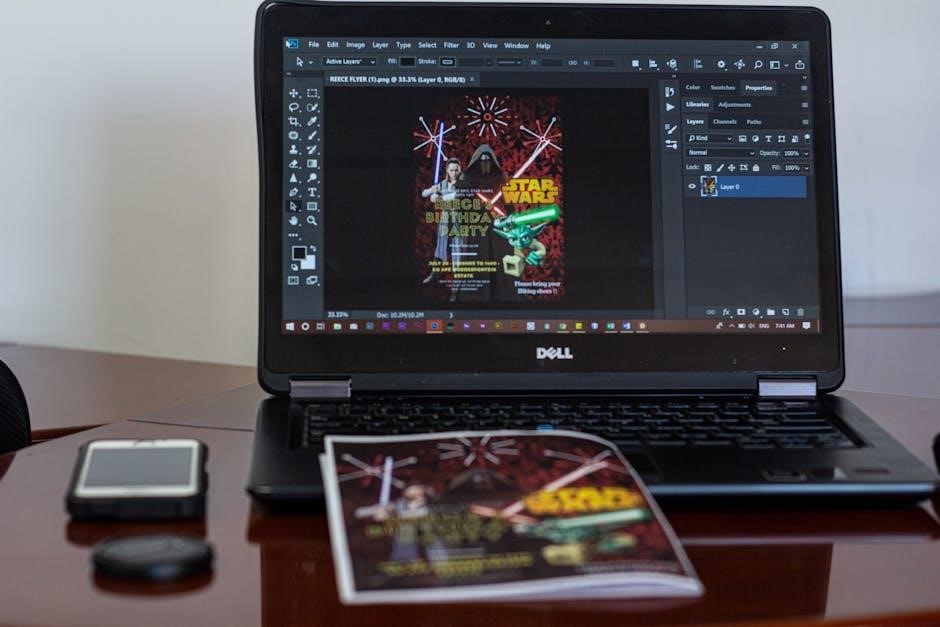
uefi pdf
UEFI and PDF Integration: A Comprehensive Guide (Updated 04/29/2026)
Today, April 29th, 2026, the UEFI Forum released Specification Version 2.8, enhancing hardware support and software capabilities, crucially impacting PDF handling within firmware environments.
What is UEFI?
Unified Extensible Firmware Interface (UEFI) is a modern system firmware interface, superseding the traditional BIOS. It acts as an intermediary between a computer’s hardware and the operating system, initializing the hardware components before the OS loads. Unlike BIOS, UEFI boasts a more sophisticated and flexible architecture, supporting larger hard drives and offering enhanced security features like Secure Boot;
The UEFI specification, continually updated – with Version 2.8 released today, April 29th, 2026 – defines how the operating system interacts with the system’s hardware. This evolution is crucial as new hardware capabilities emerge, demanding corresponding software support. The ability to integrate functionalities like PDF viewing directly within the UEFI environment represents a significant advancement, enabling pre-boot access to critical documentation and diagnostics, and potentially streamlining firmware updates.
The Evolution of Firmware: From BIOS to UEFI
BIOS (Basic Input/Output System) historically served as the initial software run when a computer starts, responsible for hardware initialization and booting the operating system. However, BIOS faced limitations – a 16-bit architecture, limited hard drive support (under 2.2TB), and security vulnerabilities. The need for a more robust and modern firmware solution led to the development of UEFI.
UEFI addressed these shortcomings with a 32/64-bit architecture, support for larger storage devices, and enhanced security features. The UEFI Forum continually updates the specification – the latest being Version 2.8, released today, April 29th, 2026 – to accommodate evolving hardware capabilities. This ongoing evolution is vital for supporting advanced functionalities, including the potential for integrated PDF document handling, offering pre-boot access to crucial information and diagnostics, a capability absent in traditional BIOS systems.
Why the Need for PDF Support in UEFI Environments?
Integrating PDF support within the UEFI environment addresses a growing need for secure, pre-boot access to critical documentation. Traditionally, accessing information required a fully booted operating system. However, UEFI’s capabilities allow for viewing PDFs directly during the startup process, enabling technicians to troubleshoot hardware issues using diagnostic manuals, or review firmware update instructions before applying them.
This is particularly valuable for secure document viewing, as the UEFI environment can offer a trusted execution environment before the OS loads. The recent UEFI Specification Version 2.8 release, announced today, highlights the importance of supporting new hardware capabilities with corresponding software advancements, making PDF rendering a logical extension of UEFI’s functionality. It streamlines workflows and enhances system maintainability.

Understanding the UEFI Architecture
The UEFI architecture comprises drivers, applications, and services, enabling pre-boot PDF functionality through a shell environment and secure boot implementations.
UEFI Components: Drivers, Applications, and Services
UEFI’s modular design relies on interconnected components: drivers, applications, and services, all vital for potential PDF support. Drivers facilitate communication between the UEFI environment and hardware, crucial for rendering PDF content if dedicated graphics capabilities are present. Applications, specifically UEFI shell applications, could be developed to directly view or process PDF files. Services provide core functionalities, including file system access, necessary for locating and loading PDF documents.
The interplay between these components is key. A PDF viewer application would utilize file system services to access the PDF, and potentially graphics drivers to display it. New capabilities established in hardware necessitate corresponding software support within the UEFI specification, directly influencing how PDF functionality can be implemented and optimized. This layered approach allows for flexible and extensible PDF integration within the pre-boot environment.
The UEFI Shell Environment
The UEFI Shell environment provides a command-line interface for interacting with the UEFI firmware. While not inherently PDF-aware, it offers a potential pathway for PDF functionality. Developers can create UEFI shell applications capable of parsing and displaying PDF content, albeit with limitations due to the shell’s text-based nature and resource constraints.
However, the shell’s ability to execute applications opens possibilities for running lightweight PDF viewers or utilities. The recent UEFI Specification updates emphasize supporting new hardware capabilities with corresponding software, suggesting potential enhancements to the shell environment to better accommodate complex file formats like PDF. Utilizing the shell for PDF-related tasks, such as diagnostics or firmware updates containing PDF documentation, represents a practical application of this environment.
Secure Boot and its Implications

Secure Boot, a core UEFI feature, significantly impacts PDF functionality within the pre-boot environment. It ensures only authorized software, digitally signed by trusted authorities, can execute during system startup. This presents challenges for PDF viewers or utilities not pre-approved by the OEM or system administrator.
To utilize PDFs securely – for example, firmware update instructions or diagnostic reports – any associated UEFI application must be properly signed. The UEFI Forum’s recent Specification updates prioritize security, reinforcing the importance of robust signature verification. Bypassing Secure Boot to load unsigned PDF handling code introduces substantial security risks. Therefore, a trusted chain of custody, from PDF creation to UEFI execution, is paramount for maintaining system integrity when integrating PDF support.

PDF Functionality within UEFI
Implementing PDF support within UEFI requires overcoming rendering challenges, exploring available viewers, and leveraging UEFI drivers for seamless document accessibility.
Rendering PDFs in UEFI: Challenges and Solutions
Rendering Portable Document Format (PDF) files within the Unified Extensible Firmware Interface (UEFI) environment presents unique hurdles. Traditional operating system-based PDF rendering relies on extensive libraries and resources unavailable pre-boot. UEFI’s limited resources – memory, processing power, and graphical capabilities – necessitate highly optimized solutions.
Challenges include the complexity of the PDF format itself, encompassing varied versions, fonts, images, and interactive elements. Parsing and interpreting this data efficiently within UEFI’s constraints is paramount. Solutions involve employing lightweight PDF rendering engines specifically designed for embedded systems, or utilizing UEFI drivers to offload rendering tasks to compatible hardware.
Adaptive scaling and font substitution are crucial for ensuring readability on diverse UEFI displays. Furthermore, security considerations demand robust parsing to prevent vulnerabilities arising from malformed PDF files. The recent UEFI 2.8 specification aims to address some of these limitations by providing enhanced hardware support, potentially improving PDF rendering performance.
PDF Viewers for UEFI: Available Options
Currently, the landscape of dedicated PDF viewers for UEFI environments is relatively nascent, reflecting the complexity of implementation. Several approaches are emerging, ranging from custom-built UEFI applications to adaptations of existing open-source rendering libraries. Some firmware vendors are integrating basic PDF viewing capabilities directly into their UEFI shells, primarily for diagnostic and troubleshooting purposes.
Open-source projects, leveraging libraries like MuPDF or Poppler, offer potential pathways for creating more feature-rich UEFI PDF viewers. However, these require significant porting and optimization to function effectively within UEFI’s resource constraints. Commercial solutions are also appearing, often tailored for specific hardware platforms and security requirements.
The availability of these options varies depending on the UEFI implementation and hardware support. The recent UEFI 2.8 specification’s enhancements may spur further development and wider adoption of dedicated PDF viewing tools within pre-boot environments.
Utilizing UEFI Drivers for PDF Support
UEFI drivers play a crucial role in enabling PDF functionality by providing a standardized interface between the UEFI environment and underlying hardware. Specifically, graphics drivers are paramount for rendering PDF content, requiring compatibility with PDF rendering libraries. Developing dedicated PDF drivers allows for optimized performance and access to hardware acceleration features.
These drivers handle tasks like font handling, image decoding, and color space conversion, all essential for accurate PDF display. The UEFI specification facilitates the creation of modular drivers, allowing vendors to integrate PDF support without modifying core UEFI components. However, driver development demands a deep understanding of both UEFI architecture and PDF specifications.
Improperly designed drivers can introduce instability or security vulnerabilities, highlighting the need for rigorous testing and adherence to UEFI standards. The recent UEFI 2.8 updates aim to streamline driver development and improve overall system reliability.
UEFI Specification Version 2.8 and PDF Compatibility
The updated UEFI 2.8 specification introduces new capabilities supporting silicon advancements, directly influencing PDF handling and rendering performance within pre-boot environments.
New Capabilities in UEFI 2.8 Relevant to PDF Handling
UEFI Specification Version 2.8 brings significant enhancements directly applicable to PDF document processing within the firmware environment. As hardware capabilities evolve, the UEFI specification adapts to support these advancements, creating a more robust platform for complex tasks like PDF rendering. This latest version focuses on improved driver support, enabling more efficient communication between the UEFI shell and potential PDF rendering engines.
Moreover, UEFI 2.8 introduces refined data handling protocols, which are crucial for securely parsing and displaying PDF content. These improvements address potential vulnerabilities associated with PDF parsing, bolstering the overall security of the pre-boot environment. The specification also emphasizes standardized interfaces, facilitating easier integration of third-party PDF viewers and utilities. This standardization is key for developers aiming to create portable and reliable PDF solutions for UEFI-based systems, ensuring broader compatibility and simplified maintenance.
Hardware Support and PDF Rendering Performance
PDF rendering within the UEFI environment is intrinsically linked to underlying hardware capabilities. Modern GPUs, increasingly integrated into system chipsets, offer dedicated acceleration for graphics processing, directly benefiting PDF display. UEFI 2.8 leverages these advancements by providing standardized interfaces for accessing GPU resources, allowing PDF viewers to offload rendering tasks and achieve smoother performance.
However, performance remains a key consideration, particularly in pre-boot environments with limited resources. Efficient driver implementation is crucial for maximizing hardware utilization. The UEFI specification encourages optimized driver design to minimize overhead and ensure responsive PDF viewing. Furthermore, the availability of hardware-accelerated codecs for image decompression within PDFs significantly impacts rendering speed. As new silicon features emerge, the UEFI framework must adapt to harness their potential, continually improving the user experience for PDF-based diagnostics and secure document viewing.
Impact of UEFI Updates on Existing PDF Implementations
UEFI specification updates, like the recent Version 2.8 release, necessitate careful consideration for existing PDF implementations within the firmware environment. While aiming for backward compatibility, new features and standardized interfaces may require modifications to existing drivers and applications. Developers must assess the impact of these changes on their current PDF viewers and diagnostic tools.
The introduction of enhanced security features and GPU access protocols in UEFI 2.8 could demand code adjustments to ensure continued functionality and optimal performance. Thorough testing is paramount to identify and resolve any compatibility issues. Furthermore, adherence to the updated specification’s guidelines is crucial for maintaining secure PDF parsing and rendering. Ignoring these updates may lead to instability or vulnerabilities, highlighting the importance of proactive adaptation within the UEFI ecosystem.
Practical Applications of UEFI PDF Integration
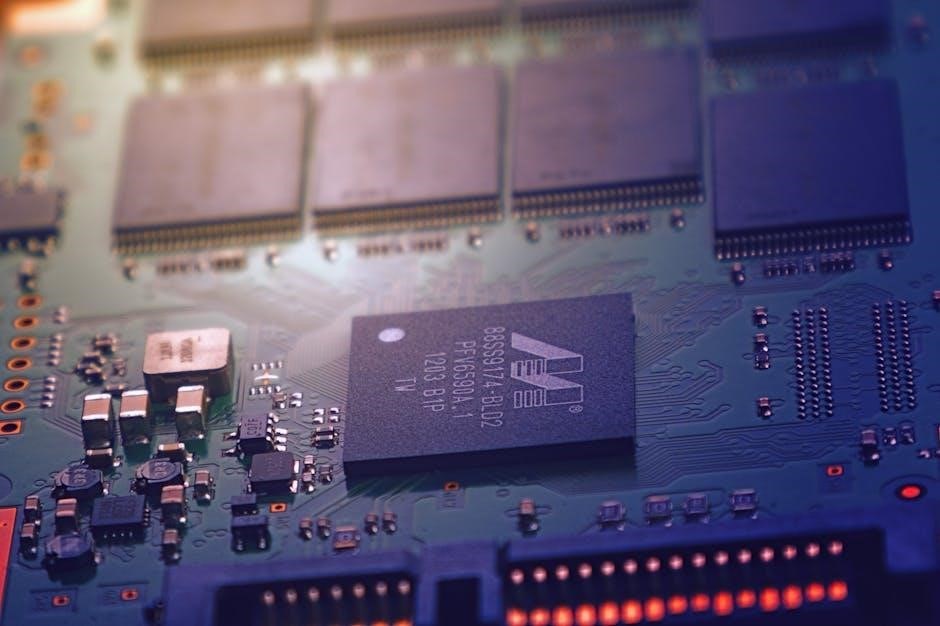
UEFI-based PDF support enables secure document viewing pre-boot, facilitates troubleshooting via diagnostics, and streamlines firmware updates and system configurations efficiently.
Secure Document Viewing in Pre-Boot Environments
The ability to securely view PDF documents within the UEFI environment, before the operating system loads, presents a significant advantage for security and controlled access. This functionality is particularly valuable in scenarios requiring verification of critical information, such as security policies, compliance documentation, or hardware configuration details.
By leveraging UEFI’s Secure Boot capabilities, organizations can ensure that only authorized and digitally signed PDFs are accessible during the pre-boot phase. This mitigates the risk of malicious documents being injected into the system before the OS security measures are active.
Furthermore, pre-boot PDF viewing allows technicians to access essential troubleshooting guides and diagnostic manuals even when the operating system is unavailable or compromised, accelerating repair processes and minimizing downtime. The UEFI environment provides a trusted platform for displaying sensitive information without relying on the potentially vulnerable OS.
Troubleshooting and Diagnostics with UEFI-Based PDFs
Utilizing PDF documents within the UEFI environment revolutionizes system troubleshooting and diagnostics, offering access to critical information even when the operating system is non-functional. Imagine a scenario where the OS fails to boot; UEFI-based PDFs can provide immediate access to hardware diagnostic procedures, error code explanations, and recovery instructions.
This capability is invaluable for technicians and IT professionals, enabling them to quickly identify and resolve issues without relying on bootable media or network connectivity. Detailed schematics, component layouts, and step-by-step repair guides can be embedded within secure PDFs, accessible directly from the UEFI shell.
By integrating diagnostic PDFs into the pre-boot environment, manufacturers can significantly reduce support costs and improve overall system reliability, providing a streamlined and efficient troubleshooting experience.
PDF-Based Firmware Updates and Configuration
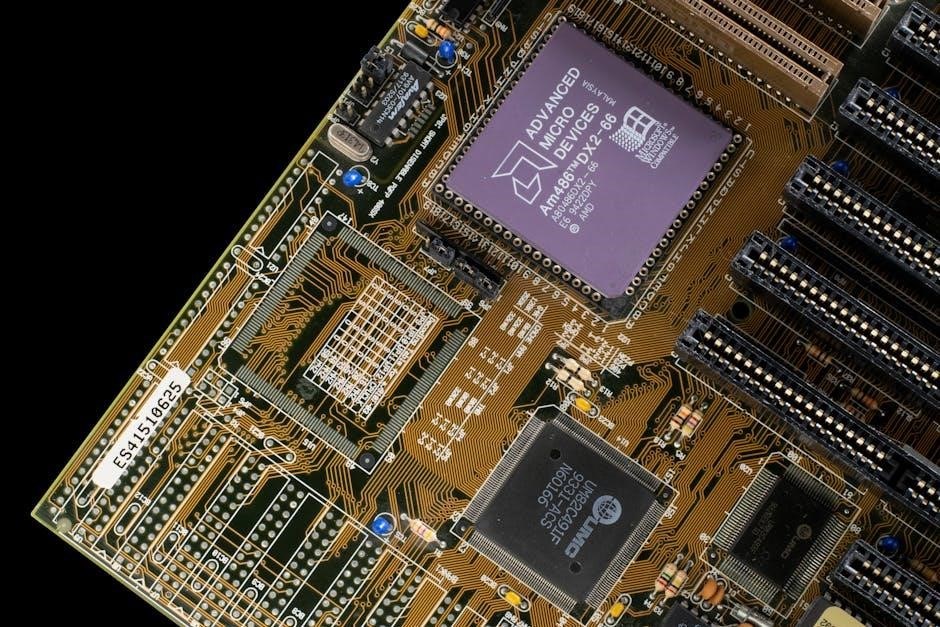
Innovatively, PDF documents can serve as secure carriers for firmware updates and system configurations within the UEFI environment. This approach leverages the PDF’s inherent security features, like digital signatures, to ensure the integrity and authenticity of the update package. A specially crafted PDF can contain the necessary firmware image and instructions for the UEFI environment to execute the update process.
This method offers a robust alternative to traditional update mechanisms, mitigating risks associated with compromised update servers or malicious software. Configuration settings, detailed installation guides, and verification procedures can all be embedded within the PDF, streamlining the update process for end-users and technicians alike.
By utilizing PDFs, manufacturers can enhance security and simplify firmware management, fostering a more reliable and user-friendly system update experience.

Security Considerations for PDF in UEFI
UEFI’s PDF integration demands vigilant security measures; potential vulnerabilities require mitigation through secure parsing, rendering, and robust digital signature authentication protocols.
Potential Vulnerabilities and Mitigation Strategies
PDF documents within the UEFI environment present unique security challenges due to the pre-boot nature and limited security context. Vulnerabilities can stem from malicious PDF content exploiting parsing flaws in UEFI PDF viewers or drivers. These exploits could potentially compromise the system’s integrity before the operating system even loads, leading to firmware-level attacks. Mitigation strategies are crucial and involve several layers of defense.
First, employing a secure PDF parser that rigorously validates PDF syntax and structure is paramount. Second, sandboxing the PDF rendering process can isolate potential exploits, preventing them from accessing critical system resources. Third, implementing robust input validation and sanitization techniques can neutralize malicious code embedded within PDF files. Finally, leveraging hardware-based security features, such as Intel’s Boot Guard or AMD’s Secure Boot, can further enhance the security posture by verifying the integrity of the UEFI environment and loaded PDF components.
Secure PDF Parsing and Rendering in UEFI
Secure PDF parsing within UEFI demands a highly cautious approach, given the pre-OS environment and limited resources. Traditional PDF parsing libraries designed for rich OS environments may introduce vulnerabilities when ported to UEFI. A streamlined, purpose-built parser focusing solely on essential PDF features is preferable. Rendering must occur within a sandboxed environment, isolating it from core UEFI services to prevent compromise.
Implementing strict input validation is critical; all PDF objects and data structures must be thoroughly checked against expected formats and ranges. Avoiding complex features like JavaScript and embedded multimedia content significantly reduces the attack surface. Utilizing memory safety techniques, such as bounds checking and buffer overflow protection, is essential. Finally, employing a read-only file system for PDF storage further mitigates the risk of malicious modifications.
Digital Signatures and PDF Authentication
Digital signatures are paramount for establishing trust when handling PDFs within the UEFI environment, ensuring document integrity and authenticity before pre-boot execution. Implementing robust signature verification requires integrating a trusted root certificate authority (CA) into the UEFI firmware. This CA validates the signing certificate chain, confirming the PDF’s origin and preventing tampering.
Authentication processes should leverage cryptographic hash functions to verify the PDF’s content hasn’t been altered since signing. UEFI’s Secure Boot features can be extended to validate the signature before allowing the PDF to be processed. Failure to verify the signature should result in immediate rejection of the document. Ensuring the signature verification process itself is secure, protected from manipulation, is crucial for maintaining overall system security.

Developing PDF Solutions for UEFI
UEFI development necessitates specialized tools and resources, alongside proficiency in languages like C, to craft secure and efficient PDF applications for pre-boot environments.
UEFI Development Tools and Resources
Developing PDF solutions for UEFI requires a specific toolkit. The UEFI Forum provides the foundational specification and related documentation, essential for understanding the environment. EDK II (the UEFI Development Kit) is paramount, offering a modular framework and build system. Compilers like GCC or Clang, configured for the UEFI target architecture, are crucial for code compilation.
Debugging relies heavily on tools like QEMU for emulation and specialized UEFI debuggers. Access to hardware platforms for testing is also vital. GitHub hosts numerous UEFI projects, serving as valuable learning resources and potential code examples. Furthermore, understanding the intricacies of the UEFI shell environment is key for deployment and testing of PDF viewers or related utilities. Leveraging these resources effectively streamlines the development process and ensures compatibility within the UEFI ecosystem.
Programming Languages for UEFI PDF Applications
C is the predominant language for UEFI driver and application development, offering direct hardware access and performance crucial for resource-constrained environments. However, modern UEFI development increasingly incorporates C++, enabling object-oriented programming and code reusability for complex PDF rendering logic. Python, while not directly executable in UEFI, can be utilized for build scripts and testing automation.
Assembly language remains relevant for low-level optimizations and interacting directly with hardware features. When dealing with PDF parsing and rendering, libraries written in C or C++ are often integrated. The choice depends on the application’s complexity and performance requirements. Utilizing established PDF libraries, adapted for the UEFI environment, is often more efficient than building a parser from scratch. Careful consideration of memory management is paramount in all languages.
Testing and Debugging UEFI PDF Implementations
Testing UEFI-based PDF solutions presents unique challenges due to the pre-boot environment and limited debugging tools. Emulation platforms, like QEMU, are invaluable for initial testing and identifying basic functionality issues without requiring physical hardware. Debugging often relies on serial port output and logging mechanisms, as traditional debuggers are unavailable.
Critical testing focuses on PDF parsing robustness, rendering accuracy, and security vulnerabilities. Fuzzing techniques, employing malformed PDF files, can reveal potential crashes or exploits. Memory leak detection is crucial given UEFI’s resource constraints. Thorough testing across various UEFI platforms and hardware configurations is essential to ensure compatibility. Automated testing frameworks, utilizing Python scripts, can streamline the process and improve reliability.

Future Trends in UEFI and PDF Technology
UEFI’s role in secure document workflows will expand, integrating modern PDF standards like PDF/A and PDF/X for long-term archiving and reliable rendering.
Integration with Modern PDF Standards (PDF/A, PDF/X)
The evolving landscape of document management necessitates UEFI’s adaptation to modern PDF standards. Specifically, PDF/A, designed for long-term archiving, ensures document fidelity over decades, crucial for firmware records and audit trails accessible within the pre-boot environment. Implementing PDF/A support within UEFI guarantees consistent rendering regardless of future software or hardware changes.
Furthermore, PDF/X, tailored for reliable printing and exchange, becomes relevant as UEFI-based diagnostics increasingly rely on generating printable reports directly from the firmware interface. Supporting PDF/X ensures these reports render predictably across different printing systems. The UEFI Forum’s recent updates, emphasizing hardware capability support in software, directly facilitate these integrations.
By embracing these standards, UEFI enhances document security, accessibility, and long-term usability, solidifying its position in secure document workflows and reliable system maintenance procedures.
The Role of UEFI in Secure Document Workflows
UEFI’s secure boot capabilities position it uniquely within secure document workflows, particularly when dealing with sensitive information accessed before the operating system loads. Integrating PDF viewing within UEFI allows for verification of document integrity via digital signatures, ensuring authenticity before any system processes are initiated. This pre-OS validation mitigates risks associated with compromised operating systems or malicious software;
Firmware updates themselves, often distributed as PDFs containing configuration instructions, benefit from this security layer. UEFI can authenticate these PDFs, preventing unauthorized modifications during the update process. The recent UEFI Specification 2.8 release, focused on supporting new hardware capabilities in software, directly aids in implementing robust security measures for PDF handling.
By establishing a root of trust for document verification, UEFI strengthens the entire document lifecycle, from creation to consumption.
Emerging Technologies and PDF Support in UEFI
The future of PDF support within UEFI hinges on integrating modern PDF standards like PDF/A for long-term archiving and PDF/X for reliable printing. As hardware evolves, UEFI must adapt to leverage new silicon capabilities for accelerated PDF rendering, improving performance in pre-boot environments. Expect advancements in secure parsing techniques to mitigate vulnerabilities, alongside enhanced digital signature validation.
UEFI’s role will expand to facilitate secure document workflows, potentially incorporating blockchain technologies for tamper-proof document tracking. The UEFI Forum’s continuous updates, like Specification 2.8, demonstrate a commitment to supporting emerging technologies. This includes optimizing drivers and applications for efficient PDF handling.
Innovations in compression algorithms and rendering engines will further enhance the user experience, making UEFI-based PDF viewing more practical and secure.